In this blog
- Loafer repair Dubai starts with the wear map
- Smooth leather loafers: creases, scuffs, and dry vamps
- Suede loafers: nap, water marks, and heel rub
- Worn soles: leather, rubber, and pebble-sole drivers
- Briefing a loafer repair: the photo set
- Heel counters, linings, and trim that lets go
- Keeping repaired loafers in shape through Dubai heat
- What loafer repair cannot promise
- What we inspect before quoting loafer repair
- Frequently asked questions
- Related Save Our Shoes guides
Loafer Repair in Dubai: Caring for Leather, Suede and Worn Soles
Loafer repair Dubai covers creased leather, marked suede, worn soles, and tired heel counters—what can be fixed, where limits sit, and how to get a quote.
9 min read
Loafer repair Dubai starts with the wear map
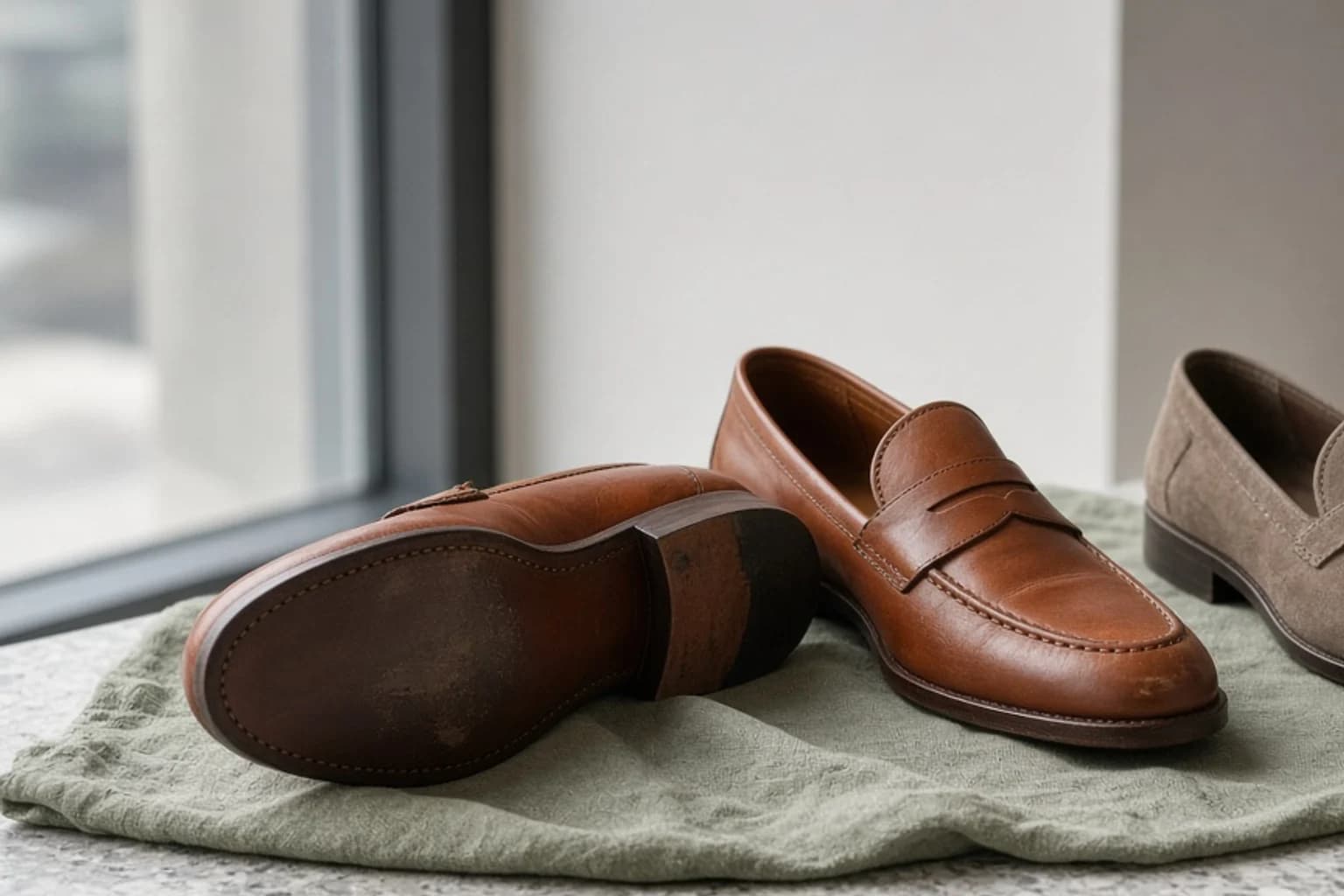
Loafers wear differently from laced shoes. With no laces to hold the foot, every step relies on the heel counter, the vamp, and a snug fit across the instep—so the first damage usually shows at the back of the heel, across the vamp crease, and under the ball and toe.
That pattern is good news when you are deciding whether to repair. Most problems are local, and a pair with a sound upper and a firm heel counter is usually worth assessing before you replace it. Atelier restoration and repair at Save Our Shoes separates cleaning, leather or suede work, and sole repair into their own lines, so each fix is approved on its own.
| Zone | What you notice | Usual route |
|---|---|---|
| Vamp | Deep creases, dry patches, toe scuffs | Clean, condition, and colour-blend where finish is lost |
| Suede upper | Flattened or shiny nap, water rings, dark heel rub | Material-safe cleaning and nap revival |
| Sole and heel | Thin toe, worn heel block, early edge peel | Heel top-piece, half-sole, or reglue after inspection |
| Heel lining and counter | Lining worn through, back trodden down, heel slip | Lining repair or counter support, case by case |
| Trim | Loose penny strap, wobbly bit, frayed tassel | Stitching or hardware work quoted separately |
Smooth leather loafers: creases, scuffs, and dry vamps
Every loafer creases across the vamp where the foot flexes. A crease is normal; a crease that has turned pale, chalky, or cracked is a sign the leather is drying faster than it is being cared for. Dubai makes that easy—hot car cabins, chilled offices, and dusty walks between them pull moisture from calf leather week after week.
Light dryness and surface scuffs usually respond to cleaning followed by conditioning and polish. Where colour has worn through on the toe or along the crease, shoe restoration Dubai work can blend pigment back into the area—the same approach covered in our guide to repairing scuffed leather.
Open cracks are a different job. Once white fibres show inside a crease, conditioner alone will not close it, and the decision shifts to whether the leather can still flex safely. Our guide to cracked leather shoe repair explains how far dry leather can be revived.
Suede loafers: nap, water marks, and heel rub
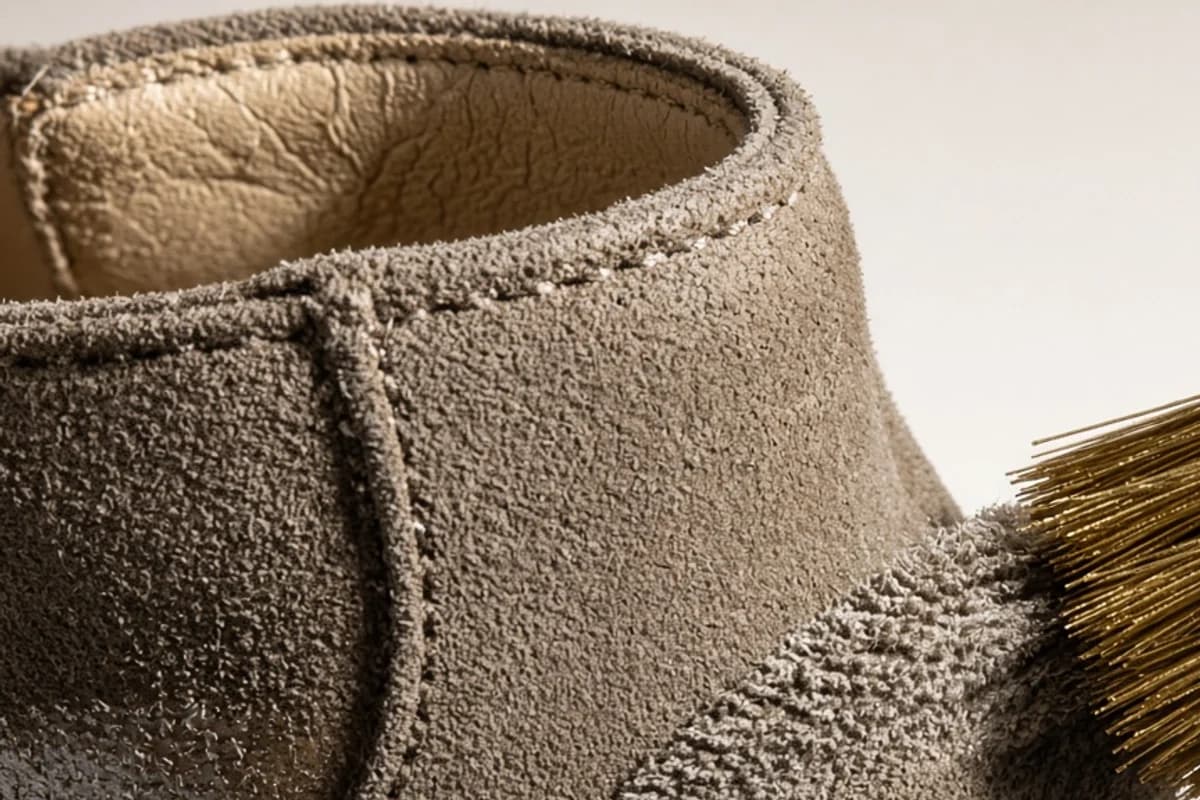
Suede loafers are often the pair people wear most in Dubai's cooler months, and the pair most often damaged at home. Water rings from a splash, darkened patches from hand cream or sunscreen, and a shiny, flattened strip at the heel where the shoe rubs are the usual complaints.
Suede has no protective top finish, so wet cleaning, household sprays, and hard scrubbing can leave tide marks or bald patches that are harder to fix than the original stain. A safer sequence starts with dry brushing to read the nap, followed by material-safe cleaning, drying with shape support, and nap revival with the right brush.
Fine suede and unlined styles need an even lighter hand. Our Loro Piana suede restoration shows the approach: lift the nap, keep the tone even, and avoid aggressive cleaning. For suede cleaning in more depth, see our guide to suede shoe cleaning in Dubai.
Worn soles: leather, rubber, and pebble-sole drivers
Loafer soles fall into three broad groups, and each has a different repair path. Leather soles thin at the toe and under the ball, rubber and combination soles wear unevenly at the heel, and driving moccasins sit on rubber pebbles or pads moulded onto a soft sole.
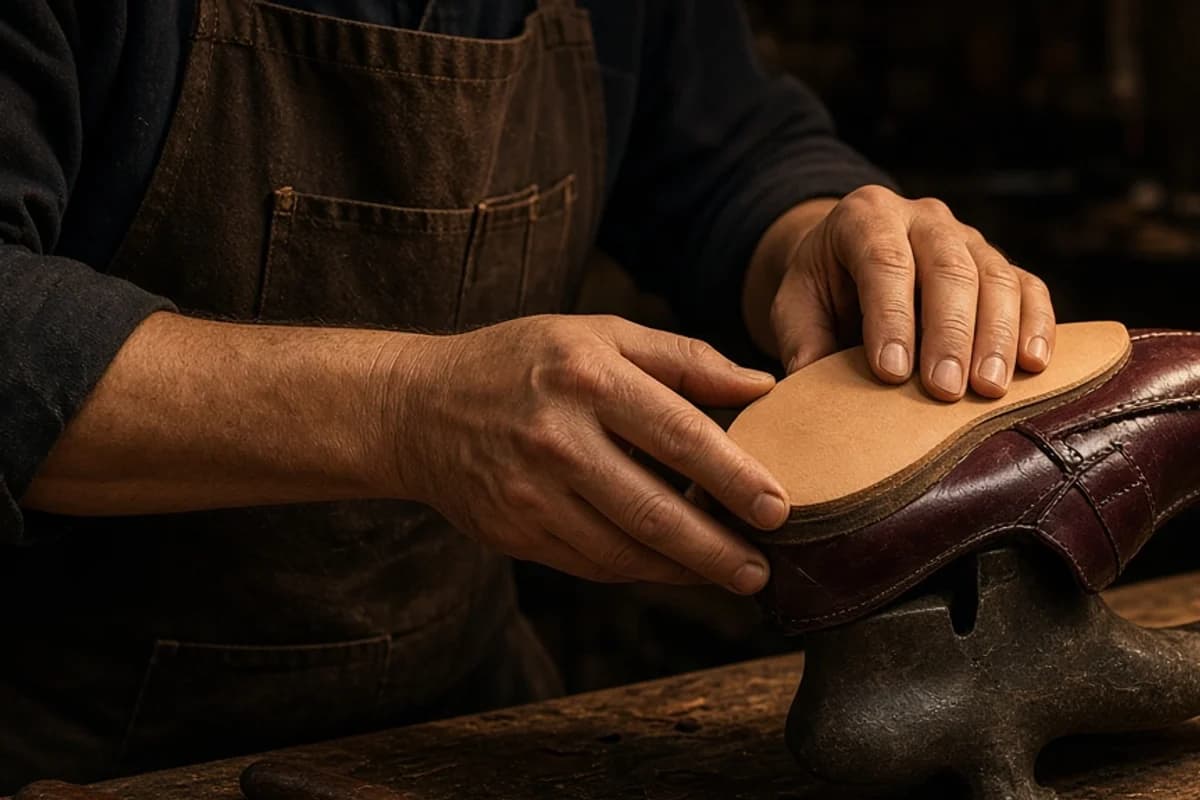
On leather-soled loafers, a worn heel top-piece can usually be replaced, and a thinned forefoot can often take a half-sole if the welt and upper are sound. Our guide to when a worn sole can still be rebuilt covers the limits; an edge that has only begun to lift belongs in a professional sole reglue before grit gets into the joint.
Pebble-sole driving moccasins are the hardest to repair. The pads are part of a soft, flexible sole that wraps the upper, so once they wear through to the leather, a conventional resole may not be possible. A photo of each sole decides whether a repair is realistic or whether the pair is best kept for light wear.
Professional shoe repair Dubai assessment matters here because tube glue and stick-on soles fail quickly in heat and can damage the sole edge for a later repair. Send photos of the sole before trying a home fix.
Briefing a loafer repair: the photo set
A clear photo set lets the atelier separate cleaning, upper work, and sole repair before the pair leaves home. Send it to the WhatsApp photo-quote line with a note on how often you wear the pair and any products you have already tried.
A useful repair quote Dubai lists each job separately, so you can approve a new heel without paying for colour work you do not need; repair prices show where each job starts. Our shoe repair photo-quote checklist has the full shot list; for loafers, add the angles below.
- Photograph both loafers from the side, back, and top in daylight.
- Show the soles flat on, plus close-ups of the toe and heel wear.
- Add the inside back of each shoe so heel lining wear and counter shape are visible.
- Include close-ups of any loose penny strap, bit, or tassel, and name the material if you know it—calf, suede, nubuck, or patent.
Heel counters, linings, and trim that lets go
Slip-on wear concentrates at the back of the shoe. Treading down the heel to step in, or skipping a shoehorn, folds the counter and wears the lining thin where the heel rubs. A collapsed counter changes how the loafer grips, so the shoe starts slipping and the wear speeds up.
Worn heel linings can often be repaired, and a softened counter can sometimes be supported, but a back that has been folded flat for months may not recover its original shape. If a loafer feels too tight rather than too loose, that is a fit question—our guide to shoe stretching in Dubai covers what can safely ease.
Trim is its own category. Penny straps can lift at their stitching, metal bits can loosen at their fixings, and tassels can fray or snap. Designer shoe repair Dubai work on these details is about matching thread, finish, and placement so the repair disappears—the standard set out on our premium craftsmanship page.
Keeping repaired loafers in shape through Dubai heat
Repaired soles and refreshed leather need a calm first week. Avoid long walks on hot pavement while new adhesives settle, and give suede a dry brush after each wear rather than reaching for a spray.
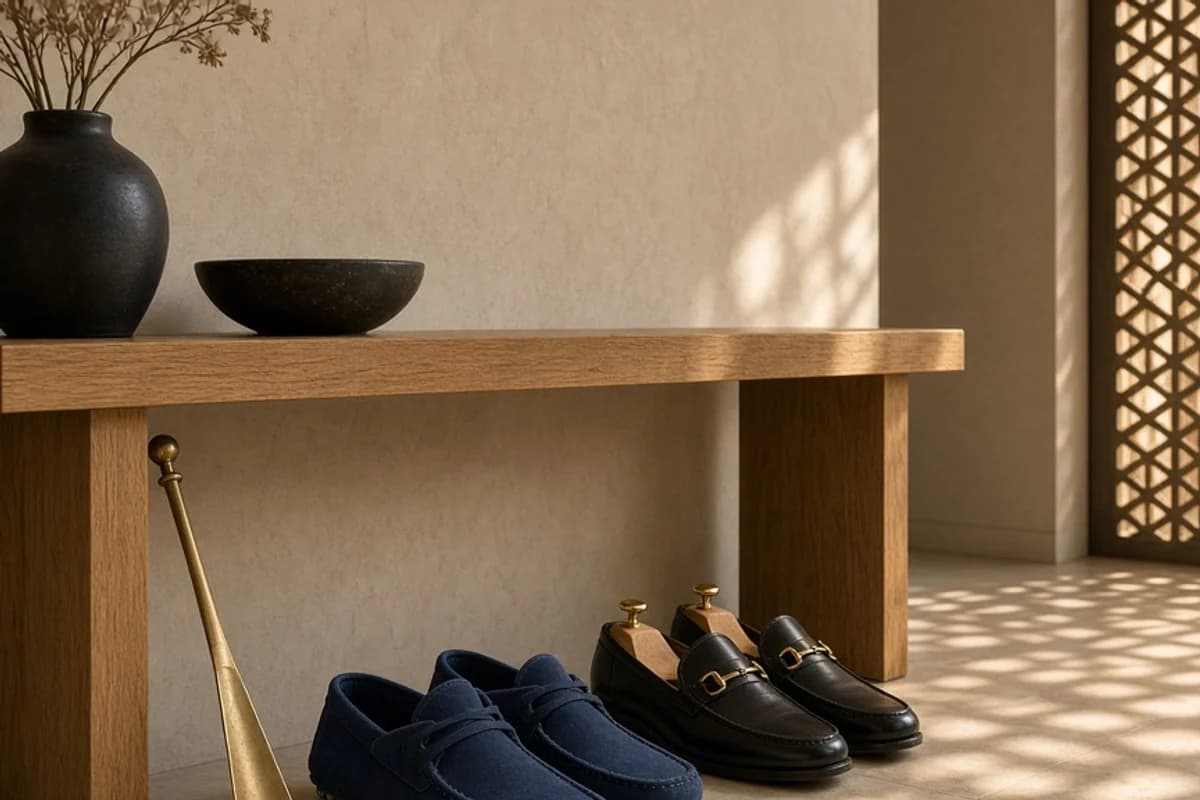
Between wears, cedar shoe trees hold the vamp and absorb moisture, and a long shoehorn protects the heel counter you have just had repaired. When the next pair needs attention, door-to-door pickup across Dubai keeps loafers out of hot car boots between your home and our Al Wasl atelier.
- Use a shoehorn every time, especially on soft unlined loafers.
- Rotate pairs so leather has a day to dry out between wears.
- Store away from windows and strong AC vents, in breathable bags rather than plastic.
- Photograph new sole wear early—a heel top-piece is a smaller job than a worn-through heel block.
What loafer repair cannot promise
- Deep vamp creases soften with care but do not disappear.
- Pebble-sole driving moccasins worn through to the leather may not be repairable with a conventional resole.
- Suede with bald patches or heavy oil stains may improve without returning to an even, new nap.
- Final scope is confirmed after physical inspection, not from photos alone.
What we inspect before quoting loafer repair
- The upper material—smooth calf, suede, nubuck, or patent—and how it has aged.
- Sole type, wear depth at the toe, ball, and heel, and any edge separation.
- Heel counter shape, heel lining wear, and how the shoe grips the foot.
- Penny straps, bits, tassels, and stitching, plus any DIY products already used.
FAQ
Frequently asked questions
Can loafers with worn leather soles be resoled in Dubai?
Often, yes. If the upper and welt are sound, a worn heel top-piece can be replaced and a thinned forefoot can usually take a half-sole. Wear that has gone through the sole into the welt or upper needs a closer look, so send photos of both soles flat on for a photo quote.
Can suede loafers be repaired as well as cleaned?
Yes. Suede loafers often need both: cleaning and nap revival for marks and flattened areas, and repair for heel linings, soles, or loose trim. Each is quoted separately, so you approve only what the pair needs.
Can driving moccasins with rubber pebble soles be repaired?
It depends on how far the wear has gone. Lifting pads or early wear may be manageable, but once the pebbles have worn through to the leather, a conventional resole may not be possible. A clear photo of each sole is the quickest way to find out.
Do you repair designer loafers?
Yes. Designer shoe repair Dubai work at Save Our Shoes includes loafers, among them Loro Piana suede and fine leather pairs. We are an independent atelier and not affiliated with any fashion house, so if you prefer the brand's own after-sales service, check with the boutique before booking.