In this blog
- Name the mark before you wet the sneaker
- Which everyday marks are still safe to try at home?
- Stain types that usually need professional care
- Why Dubai heat ages stains faster than owners expect
- What a sneaker deep clean Dubai visit adds beyond spotting
- Photo checklist before you book a sneaker cleaning service Dubai
- Aftercare that keeps the next stain from setting
- What sneaker stain removal cannot promise
- What we inspect before quoting stained sneakers
- Frequently asked questions
- Related Save Our Shoes guides
Sneaker Stain Removal in Dubai: Which Marks Need Professional Care?
Sneaker stain removal Dubai works best when you name the mark first—dust, oil, dye, ink, or oxidation—then decide what is safe at home versus workshop care.
8 min read
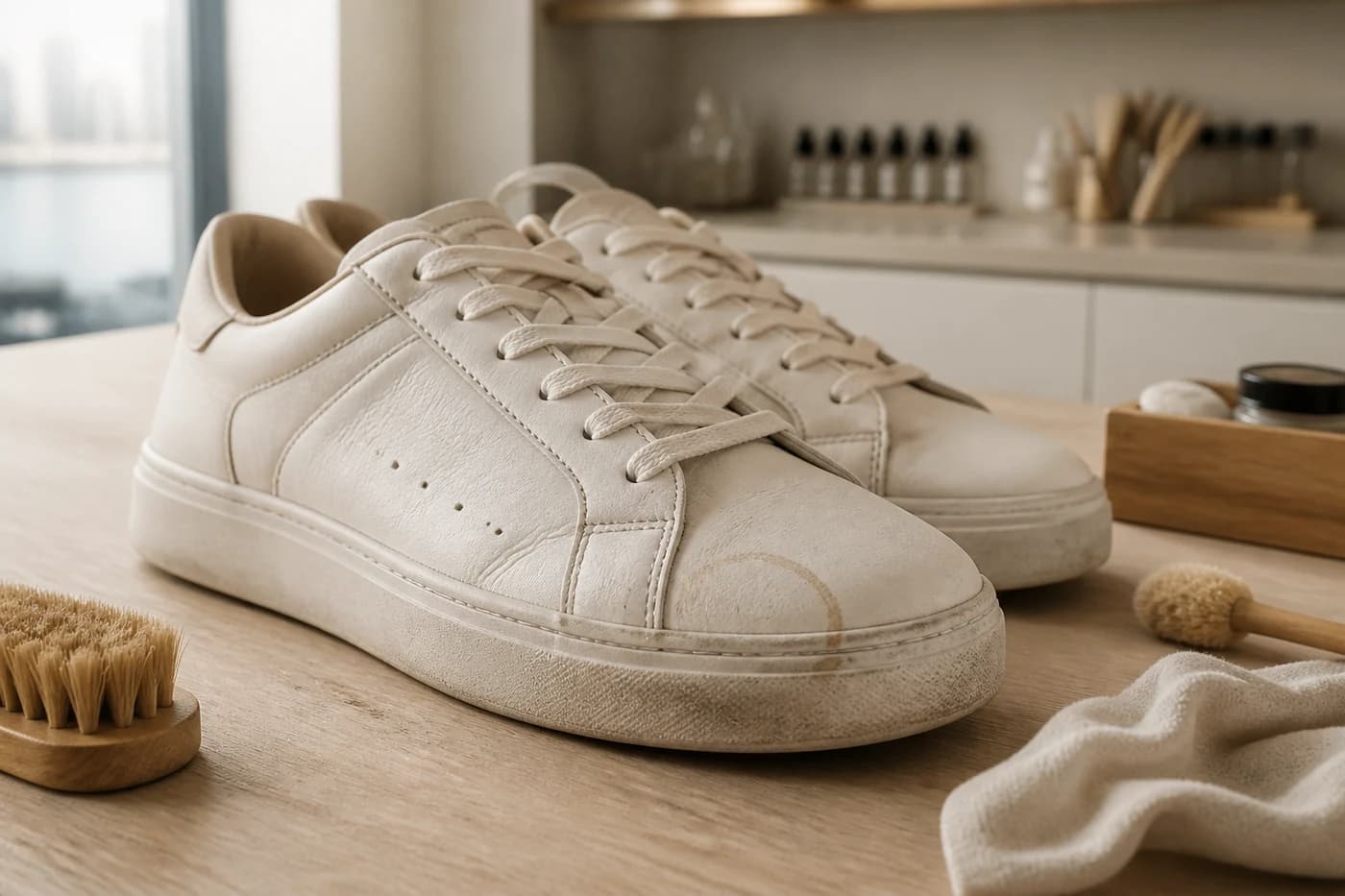
Name the mark before you wet the sneaker
Most failed home cleans begin the same way: one product for every panel, rubbed hard because the shoe looked dirty. Dubai stains are rarely one substance. Dust, oil, dye transfer, and midsole oxidation often sit in layers on the same toe.
Wetting the wrong layer first turns grit into abrasive paste, spreads dye into a wider halo, or drives oil deeper into foam. Naming the mark—surface soil, protein or food residue, oil, pigment transfer, ink, or oxidation—decides whether a soft brush is enough or whether professional care is safer.
When panels mix leather, mesh, suede, and rubber, browse atelier sneaker care rather than guessing with kitchen chemistry. Hybrid trainers need zone-by-zone decisions, not a single circular scrub.
Which everyday marks are still safe to try at home?
A safe DIY window is narrow. Dry sand and pavement dust can be lifted outdoors with a soft brush before any liquid touches the upper. Fresh mud should dry fully first—scraping wet clay smears pigment into mesh and knit.
Light grey film on sealed leather or rubber midsoles sometimes improves with a barely damp microfibre after dry prep. Patch-test a hidden seam. If colour lifts onto the cloth, stop—the finish or dye is unstable.
Skip washing machines, bleach, toothpaste, acetone, and kitchen degreasers. Those shortcuts fray textiles, haze coatings, weaken foxing glue, and leave bright patches that never quite match the rest of the shoe.
- Safe once: dry brushing grit, blotting fresh water, one light spot on sealed leather or rubber after a patch test.
- Pause and photograph: oil sheen, ink, dye transfer, coffee rings, yellow midsole bands, tide rings from earlier liquids.
- Never: bleach, machine washes, abrasive pastes, or repeated scrubbing on the same stain.
Stain types that usually need professional care
Oil and grease from food courts, car pedals, and hair products rarely lift with water-based foams. Wetting oil often enlarges a translucent halo on leather and foam midsoles. Ink, ballpoint, and fabric-marker transfer need controlled solvents matched to each panel—not alcohol wipes dragged across mesh.
Denim and handbag dye transfer that cured in a hot boot behaves like a partial dye job. Fresh transfer may lighten with careful spotting; set pigment may only improve, not disappear. Midsole oxidation and amber banding are chemistry and UV history problems—not ordinary dirt.
If a prior foam, whitener, or balcony sun session already failed, further DIY usually complicates professional sneaker cleaning Dubai. Document what you used, then pause. A second home pass is how a fixable mark becomes a restoration brief.
| Mark type | First move at home | Book care when |
|---|---|---|
| Dry dust and sand | Dry-brush outdoors, then light spot if needed | Grey film packed in eyelets, tongue edges, or midsole gaps |
| Fresh mud | Let dry fully, lift crust before liquid | Mud smeared into a tide ring after a soak |
| Oil, grease, food | Blot fresh oil; never rub wet | Oxidised oil on leather, mesh, or midsole foam |
| Dye transfer or ink | Blot; do not rub wet pigment | Set dye after heat, or marks across mixed panels |
| Yellowed or oxidised midsoles | Wipe loose film only | Amber banding, deep grey sidewalls, or failed whitener DIY |
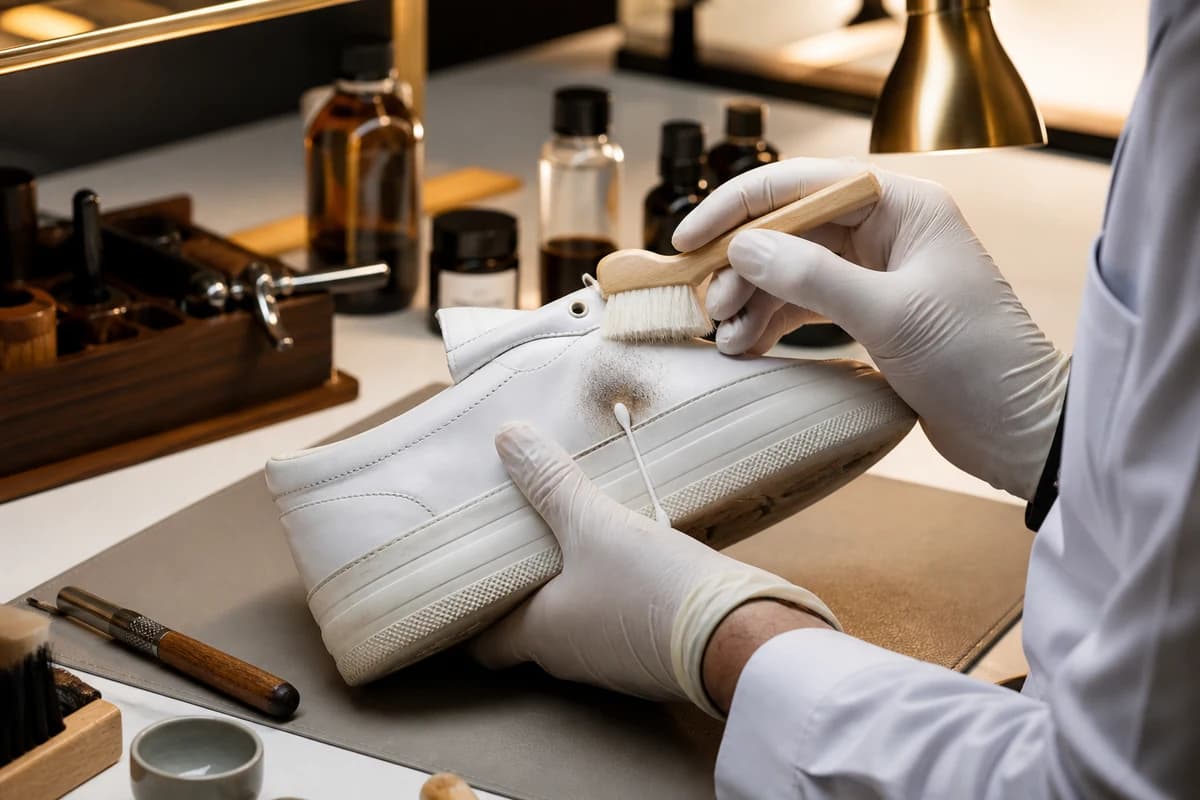
Why Dubai heat ages stains faster than owners expect
Car boots, sunny balconies, and warm pavement turn fresh spills into set marks. Moisture evaporates, pigment bonds, and oil migrates into foam cells while the shoe sits overnight. A café splash that looked mild at lunch can look bonded by the next commute.
AC cycles add another twist. Cold interiors dry soil into creases; humid evenings soften adhesives and let residue settle deeper along the midsole seam. Waiting a week to "deal with it later" is often waiting for the DIY window to close.
Material guides help when the upper is specialised—see canvas sneaker cleaning for colour transfer, mesh sneaker panel care, or leather sneaker cleaning limits. This guide stays on the decision: which marks need a workshop first.
What a sneaker deep clean Dubai visit adds beyond spotting
Spotting one mark is not the same as resetting a Dubai-worn pair. A structured sneaker deep clean Dubai sequence typically starts with dry soil removal so grit never becomes paste under a wet brush, then works panel by panel with finish-appropriate moisture.
Midsoles, outsoles, tongue undersides, and linings often hold more soil than the vamp photo suggests. Ignoring those zones is why a "cleaned" toe looks fresh for a day while grey film returns along the sidewall within a week.
For chemistry that respects mixed builds rather than defaulting to bleach, see how we approach thoughtful cleaning and care. Hand-finished sequences protect adhesives better than aggressive scrubbing under heat.
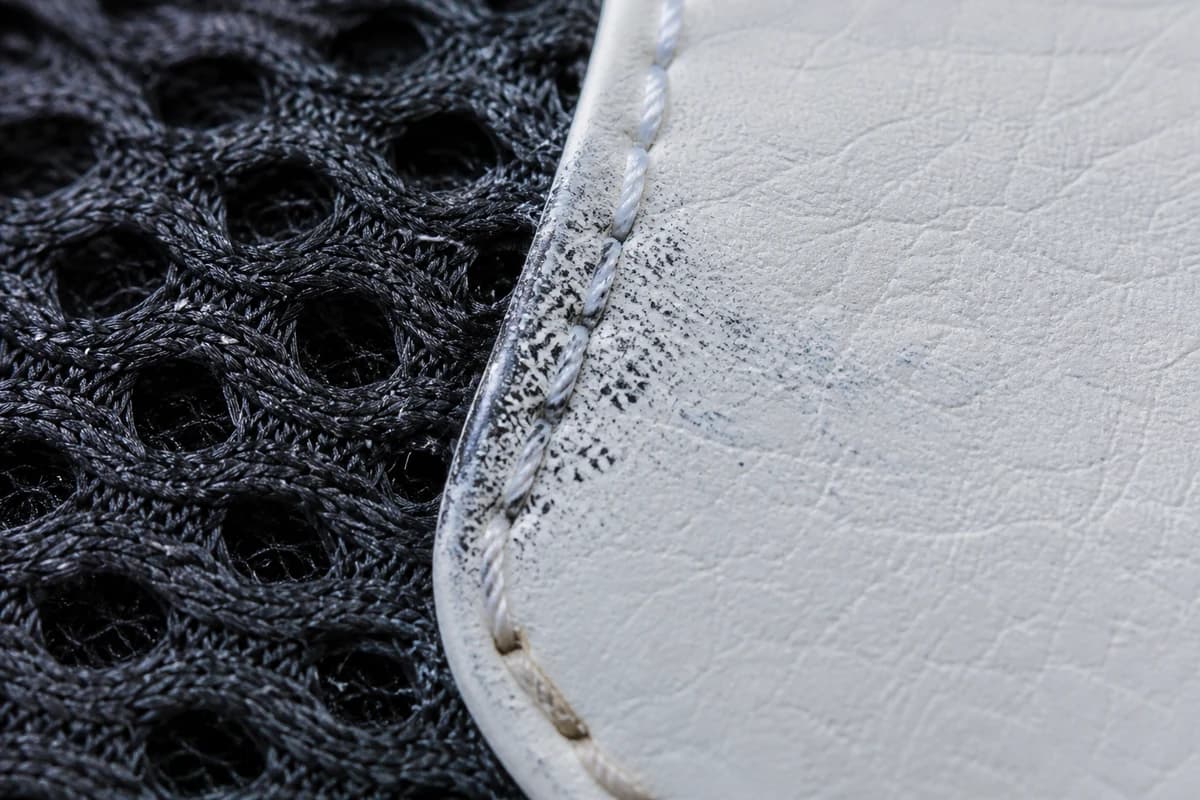
Photo checklist before you book a sneaker cleaning service Dubai
A clear photo quote beats a surprise invoice. Daylight shots show stain colour and midsole condition more honestly than flash or shade alone.
Compare scope against the pricing overview so clean-only versus stain work, odour, or midsole whitening is named before pickup. Results depend on material, stain age, and prior DIY—not on how hard anyone scrubs.
Browse before-and-after results with your photos in mind. Cleaning can restore clarity; it cannot always reverse deep oxidation or set dye that bonded in heat.
- Photograph both shoes: outer and inner sides, toe, heel, midsole seam, and a stain close-up.
- Note materials if known, how old the mark is, and any products already tried.
- Send the set on WhatsApp and confirm the plan before arranging pickup or another home attempt.
Aftercare that keeps the next stain from setting
Let cleaned sneakers dry fully before the next wear. Damp foam and linings pick up new transfer faster on a hot commute. Rotate pairs when your week allows so the same vamp is not soaked every day.
Store upright with airflow—not in a sealed gym bag while damp. Wipe loose pavement film after dusty days before it cakes into the midsole gap. Protection sprays belong on clean, dry uppers only; coating dirty shoes seals dullness in.
Prefer collection without another dusty pavement walk? Arrange door-to-door pickup across Dubai once the quote is approved. A sneaker cleaning service Dubai booking should feel practical for rotation—not only emergency rescue after a failed scrub.
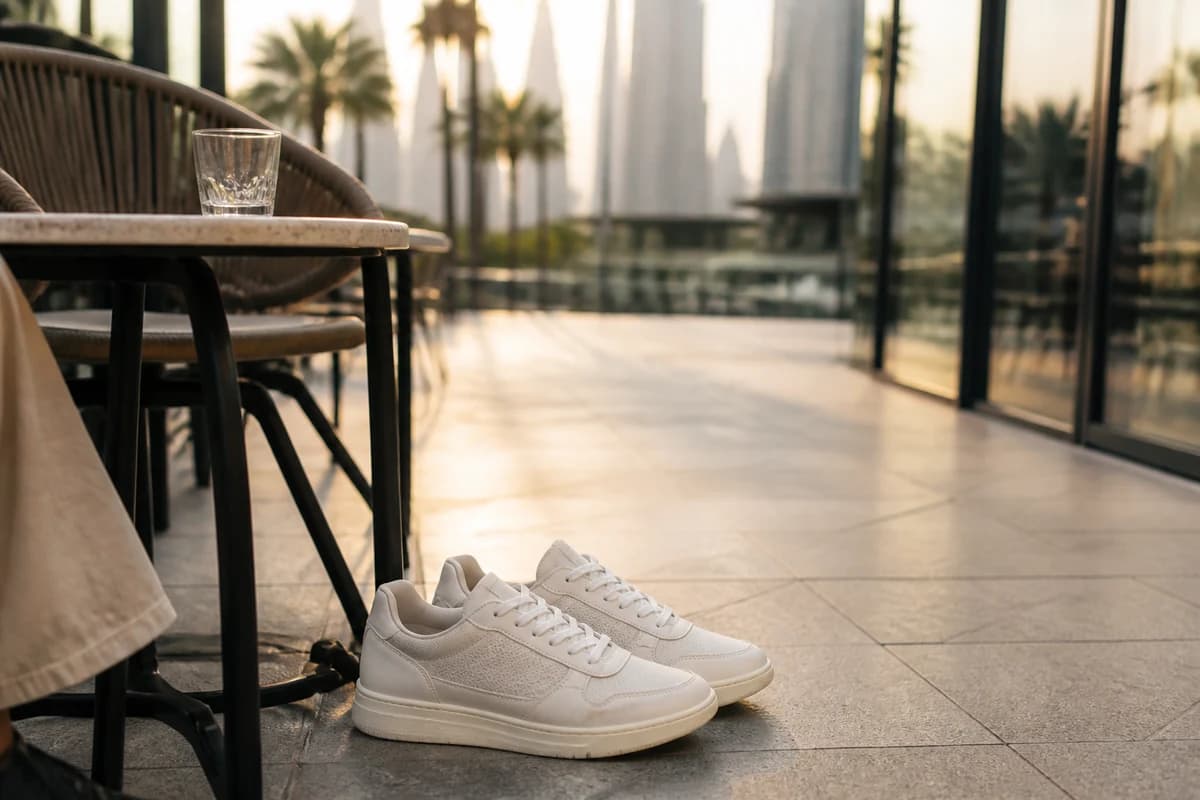
What sneaker stain removal cannot promise
- Cleaning can lighten marks; it cannot always reverse set dye, deep oil, or oxidised midsole yellowing.
- Results depend on stain age, prior DIY chemistry, and material mix—not on scrubbing harder.
- Bleach, machine washing, and heat drying are not used as standard atelier shortcuts.
- Turnaround is confirmed after photos and inspection—not as a single published time.
What we inspect before quoting stained sneakers
- Daylight photos of both shoes, stain close-ups, midsole seams, and mixed panels.
- Material mix (leather, mesh, knit, suede, canvas) and any prior sprays or DIY liquids.
- Physical intake checks adhesives, lining condition, and whether stain work or a limited refresh applies.
- If inspection changes the plan, the revised quote is confirmed before treatment.
FAQ
Frequently asked questions
When should I stop DIY sneaker stain removal in Dubai?
Stop after one careful attempt if the mark grows, a tide ring appears, colour lifts onto the cloth, or the stain is oily, ink-based, or dye transfer that sat in heat. Further scrubbing usually sets pigment or damages finishes. Photograph the pair and request a workshop assessment instead.
Can oil and grease stains come out of white sneakers?
Sometimes they lighten significantly; oxidised oil that migrated into foam or pale leather may improve without disappearing. Water-based foams often spread oil. Blot fresh grease, avoid rubbing, and send daylight photos so triage can match chemistry to the panel.
Is sneaker stain removal the same as a deep clean?
Not exactly. Stain work targets specific marks with panel-matched methods. A sneaker deep clean Dubai visit also addresses embedded grit, midsoles, outsoles, and often interiors. Many Dubai pairs need both—spotting alone leaves grey film elsewhere.
What photos help a sneaker cleaning service Dubai quote?
Send daylight shots of both shoes, toe, heel, midsole seams, and stain close-ups. Mention materials, stain age, and any products already tried. Clear photos speed triage and reduce surprises after pickup—see our shoe and bag care quote guide for the full shot list.